
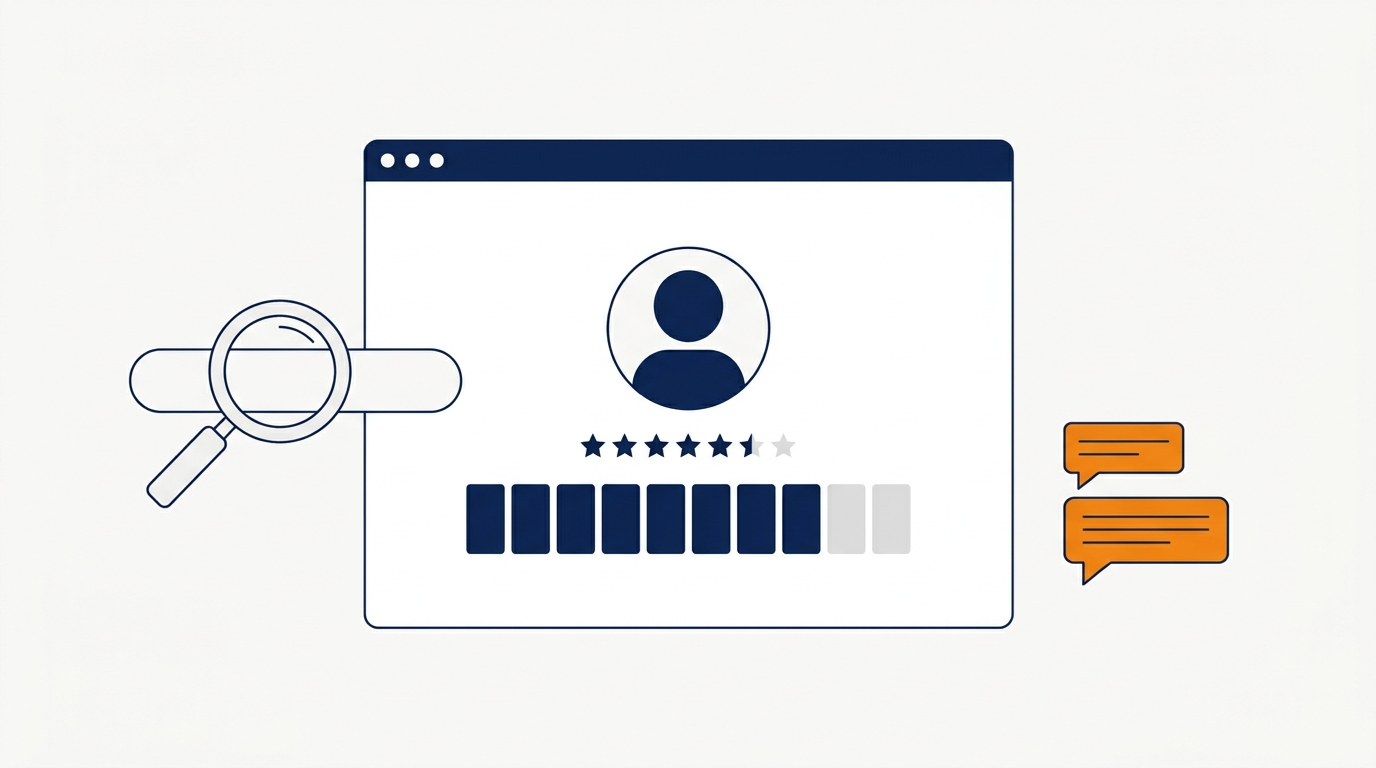
Avvo is worth claiming for most firms because the profile already exists, it often shows up when someone searches your name, and a complete profile costs nothing to maintain. What it does not do is replace your website, your Google Business Profile, or your intake process.
Firm owners ask the Avvo question for a practical reason. A prospect says they found you on Avvo, or a client mentions your rating, or you search your own name and see a profile you never built sitting above your own website. That moment forces a decision: ignore it, fight it, or take it over and make it accurate.
Here is what the profile actually is, what the score does and does not measure, where it fits in a marketing system, and how to decide what to spend on it.
What Avvo Is and Why Your Profile Already Exists
Avvo is a legal directory that publishes attorney profiles, client reviews, a lawyer rating, a legal question and answer section, and consumer education content. It has been around since 2006, and it is a real, established platform rather than a scam site, as Juris Digital notes in its 2026 Avvo guide.
The important part for a firm owner is how profiles get created. Avvo says its process "automatically create[s] profiles for the vast majority of licensed U.S. attorneys we are able to locate," drawing on public data from state bars, courts, and regulatory agencies, then updating them as more public information surfaces, according to Avvo's own explanation of the rating.
That is why an unclaimed profile can contain an old office address, a firm name you stopped using, or a practice area list that never matched your work. It was compiled, not written by you. The fix is not to remove it. The fix is to claim it and correct it.

What the Avvo Rating Measures, and What It Does Not
The Avvo Rating is a score from 1 to 10 that summarizes professional background. Avvo describes the model as weighing years licensed, work history, education and credentials, recognition such as awards, publications, speaking engagements and bar recognition, peer endorsements, and disciplinary history reported by state bars and regulatory agencies.
Two details matter more than the number itself. First, Avvo states the rating cannot be bought and that advertising or paid products do not improve it. Second, and more useful, Avvo is explicit about what the model cannot see. In its own listing of what the rating does not measure, it names case outcomes (no access to win and loss records or settlement amounts), legal skill, and communication and fit.
So a high score is a background credential. It is not a quality score, and it does not tell a prospective client how you will handle their matter. A low score is also not automatically a warning sign: Avvo says a profile can show no rating at all when there is not enough information to generate one, or when the profile has not been claimed.
This is the same point we make about lawyer review sites in general. Directory signals are inputs, not verdicts, and consumers are told by the platforms themselves to cross check.
Avvo Reviews, Client Ratings and the Ethics Trap
Client reviews and the Avvo Rating are separate signals, and neither feeds the other. Avvo's guidelines say a review should come from someone with direct experience with the lawyer, but the platform does not independently investigate factual disputes inside a review. Read them for patterns rather than single data points.
The bigger risk for a firm is on the response side. ABA Formal Opinion 496 addresses lawyer responses to online criticism, and the guidance is that a lawyer may not disclose confidential client information when replying, even when a review feels unfair or incomplete. Juris Digital makes the same point in its guide: a negative review does not give you permission to reveal client confidences.
Practically, that means a short, professional reply that stays general, or no reply at all, with the real conversation moved offline. Never the details of the representation.
Is Avvo Paid Advertising Worth It for a Small Firm?
Avvo is free to claim, and Avvo states the basic profile and rating are free without advertising or a subscription. Beyond that, the platform sells paid placement and premium products that put your profile in front of people already browsing the directory.
Whether that spend earns its place depends on your market, your practice area, and what else is already working. It is a rented audience: the traffic belongs to the directory, the lead is shared with whoever else bids in the same place, and the visibility stops when you stop paying. Nothing about paid directory placement builds an asset you own.
A reasonable order of operations for most firms is to claim and complete the free profile first, watch whether real inquiries come through it, and only then decide whether paid placement is worth testing against your other channels.
When you are comparing that spend, run it against Local Services Ads and your own Google Ads, where you control the landing page, the tracking, and the follow up.
A Claim and Maintenance Checklist for Your Profile
- Claim the profile so you can edit it. Avvo notes a claimed profile cannot be unclaimed, so do this deliberately.
- Correct the basics: firm name, office address, phone number, practice areas, bar admission year, and education.
- Fill in the optional sections too. Recognition, speaking engagements, publications, and peer endorsements are the parts of the background the model weighs and the parts a prospect actually reads.
- Check the disciplinary field against your state bar record. If something is wrong, the source record has to be fixed, not just the directory.
- Ask clients for reviews where your state's rules allow it. Avvo's review guidelines apply, and so do your bar's.
- Respond to reviews sparingly and never with case details, following ABA Formal Opinion 496.
- Search your name quarterly and confirm the profile still matches your current firm, location, and focus.
Thirty minutes once, then a few minutes a quarter, is the whole maintenance load.

Where a Directory Profile Fits in the System That Brings Clients
Directory profiles are one tile in a set of signals a prospective client checks. A workable order for a firm that wants inquiries to come from search and referrals:
- The firm's own website, with a page for each practice area and a clear path to a consultation.
- The Google Business Profile, because that is where most people reading reviews will land. Our guide to business listings and voice search covers the consistency work behind it.
- Reviews you earn and answer on the platforms clients actually use.
- Directory profiles, claimed and accurate, for the people who land there by name search.
- Intake that answers. A complete profile that routes to voicemail wastes the visit, which is why intake response time stays the highest-leverage piece of the stack.
Notice what is not on the list: buying your way to the top of somebody else's directory. That is a rental, and it sits below the assets you control.
If your goal this quarter is more consultations booked, the useful question is not whether Avvo beats Google. It is whether every place a prospect might land, directory included, is accurate and routes to a fast answer. For an even-handed look at how the major directories compare, see our breakdown of the best lawyer review sites.
Frequently Asked Questions
Is an Avvo profile required for a law firm?
No. Nothing in the rules requires you to have one. But Avvo says it creates profiles for the vast majority of licensed attorneys it can locate, so most firms have one whether they built it or not. Claiming it is how you control what it says.
Does the Avvo Rating affect whether clients hire you?
It can be one signal in a decision, but the platform itself says the model does not measure case outcomes, legal skill, or communication and fit. Treat it as a background credential and put your effort into your website, your reviews, and your intake.
Can I have my Avvo Rating removed?
Avvo states that an attorney who is not seeking clients through the platform and has no disciplinary history can request that the numerical rating not be displayed. If you are weighing that, decide it before you claim the profile, because Avvo says a claimed profile cannot be unclaimed.
Can I pay to improve my Avvo Rating?
No. Avvo states plainly that the rating cannot be bought and that advertising or paid products do not improve it. Paid placement affects where your profile is shown on the platform, not the score.
Should I ask clients to leave Avvo reviews?
Reviews can help, and Avvo's guidelines require them to come from real experience with the lawyer. Check your own state bar's advertising and solicitation rules first, since they govern how and when you may ask.
How should I respond to a negative Avvo review?
Briefly and without any client specifics. ABA Formal Opinion 496 addresses online criticism, and the guidance is that confidential client information may not be disclosed in a reply, whether or not the review feels accurate.
The Short Answer for Your Firm
Is Avvo worth it for lawyers? Worth claiming, yes, because the profile is already public and it takes very little time to make it accurate. Worth heavy investment, usually no, because the score measures background rather than fit, the reviews are one of several signals, and paid placement lives on somebody else's platform.
Claim it, correct it, fill it out, monitor it quarterly, and then get back to the work that actually moves consultations: a site that answers the question the searcher asked, a Google profile that shows the reviews they trust, and an intake process that picks up when they call.