
No, a law firm does not need an llms.txt file. Google's documentation states plainly that Google Search does not use the file, and a request-log study of 137,210 domains found that 97% of the llms.txt files it could see received zero requests in a month. The hour you would spend writing one is better spent making sure AI crawlers can reach your pages and that your firm appears in the listings and directories these engines read.

The question comes up because the file has been sold as the reason some firms get named in ChatGPT answers and others do not. That framing arrived after the format was proposed, not from any AI company saying it would read the file. Here is what the file actually is, what the two biggest pieces of evidence say about it, and what to do with the hour instead.
An llms.txt File Is a Markdown Index That Controls Nothing
An llms.txt file is a single markdown document placed at the root of a website. It summarizes what the site is about and links to its most important pages, so an AI system could orient itself without crawling everything first. Jeremy Howard of Answer.AI and fast.ai proposed the format in 2024, and the specification lives at llmstxt.org.
Two things it is not. It is not robots.txt. Nothing in it allows or blocks anything; a crawler that never opens the file loses nothing. And it is not a set of instructions any AI company has committed to follow. Ahrefs puts it directly in its analysis: the format "controls nothing and blocks nothing."
For a firm owner, the practical consequence is short. If a page of yours is the best answer to a question someone asks an AI assistant, the engine still has to find that page, read it, and decide it is credible. A file that describes the page for it does not substitute for any of those three steps.
Google's Own Optimization Guide Says Search Ignores the File
Google answered this one directly in its guide to optimizing for generative AI search. Under things site owners can ignore, the guide says: "You don't need to create new machine readable files, AI text files, markup, or Markdown to appear in Google Search (including its generative AI capabilities), as Google Search itself doesn't use them."
The same page adds a note that should settle it for anyone weighing the effort: "Doing so will neither harm nor help your site's visibility or rankings in Google Search, as Google Search ignores them."
That covers Google Search and the AI Overviews that sit inside it. A firm that publishes the file is not penalized. A firm that skips it is not behind. The file simply is not part of how that engine decides what to show.
Ahrefs Logged 137,210 Domains and 97% of Their llms.txt Files Got Zero Requests
If Google ignoring the file were the only evidence, you could still argue the other engines use it. The server logs say otherwise. Ahrefs analyzed 137,210 domains in its web analytics product and every request to their llms.txt paths during May 2026.
What it found: 28% of those domains publish an llms.txt file, a figure Ahrefs flags as an upper bound because its customers skew more technical than the web at large. Of the roughly 38,000 domains with a valid file, 97% received no requests at all that month. The remaining 3%, about 1,100 domains, absorbed every request Ahrefs measured.
Among the files that were read, the traffic was mostly not what the file's advocates expect. 96% of requests came from bots, and 19.5% of fetches came from named AI tools. Requests from AI retrieval bots such as OAI-SearchBot and PerplexityBot accounted for 1.1% of the total. A larger share, 12%, came from GEO and AEO checker tools and researchers studying the format. Ahrefs also found zero requests from AI bots for llms.txt files that do not exist, meaning the bots do not go looking for one.
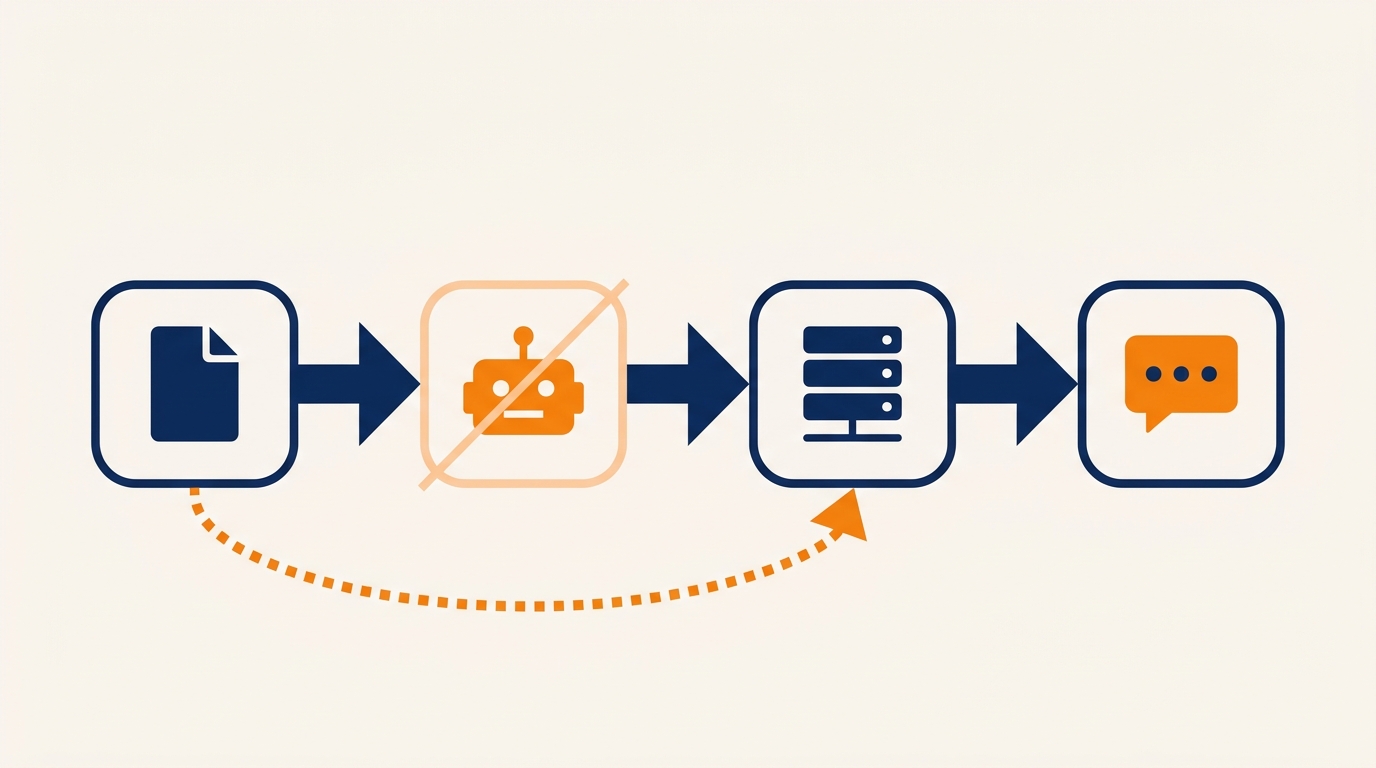
One caveat worth stating: absence of requests in one month is not proof that no system will ever read the file. It is proof that a firm publishing one today should not expect anything to happen because of it.
SE Ranking Found No Citation Lift Across Roughly 300,000 Domains
The other large study asked the question from the other direction: do sites with the file get cited more often? Search Engine Journal reported on an SE Ranking analysis of roughly 300,000 domains that found no measurable link between publishing the file and how frequently a site was cited by AI models. SE Ranking's own conclusion, as quoted in that coverage, was that llms.txt "doesn't seem to directly impact AI citation frequency. At least not yet."
Read that "yet" as an honest limit rather than a promise. Citation patterns in these engines are new, and the evidence can change. What the data does rule out today is treating llms.txt as a repair kit for a firm that is not being named. If your pages are not being cited, the cause is somewhere upstream of the file.
| Source | What it measured | Finding on llms.txt |
|---|---|---|
| Google Search Central | Whether Google Search reads the file | Search ignores it; creating one neither helps nor harms visibility |
| Ahrefs | Requests to 137,210 domains in May 2026 | 97% of valid files got zero requests; AI retrieval bots were 1.1% of fetches |
| SE Ranking | Roughly 300,000 domains and AI citation frequency | No measurable link between the file and being cited |
Crawler Access, Bing, and Visible Text Still Decide Whether a Firm Gets Cited
Every engine that might name your firm has to fetch your pages before it can quote them. That puts the practical work in five places, none of which is a file you write to describe yourself.

- Check robots.txt for blocks aimed at AI crawlers. A stray Disallow line from an old template can keep OpenAI's crawler or Google's out of the whole site, and no other fix compensates for that.
- Confirm the site is in Bing's index, through Bing Webmaster Tools. Several AI products draw on Bing's results, so a site that is invisible there is invisible to them.
- Make sure your practice area pages carry real text in the HTML. Content that only appears after a script runs, or that lives inside an image, is harder for a crawler to quote.
- Keep name, address and phone identical everywhere they appear. Inconsistent details across the Google Business Profile and the legal directories blur which firm is which.
- Earn mentions on pages you do not own. Bar association listings, local news, and reputable legal directories are the references an engine can check when two firms make similar claims. The work of building those is covered in attorney link building.
None of this is exotic. It is also the part most firms skip, which is why a crawl of a firm site often turns up a blocked directory, a missing city page, or a phone number that changed three years ago in one listing and not the others. A law firm SEO audit is the fastest way to see those gaps in one pass.
If the concern is specifically about ChatGPT, the order of diagnosis matters. Check access and indexation first, then the directory and citation layer, before concluding the content is the problem. The sequence is spelled out in why your law firm is not showing up in ChatGPT.
Questions Firm Owners Ask About llms.txt
Does publishing an llms.txt file hurt a law firm's site?
No. Google's guidance says creating one "will neither harm nor help your site's visibility or rankings in Google Search." The risk is not the file. The risk is spending the hour on it and treating the job as finished.
Will ChatGPT read my llms.txt file?
No AI company has committed to reading it, and the request logs show very little interest. In the Ahrefs study, only 1.1% of the requests that reached a known llms.txt file came from AI retrieval bots. The bots also made zero requests for files that did not exist, so they are not out looking for yours.
Should I create one anyway, since it is quick?
You can. It is a small, harmless housekeeping task. Just keep the expectation honest: it will not change what an AI engine says about your firm, because the engine's answer depends on pages it has crawled and sources it can verify.
How do I find out whether AI engines cite my firm at all?
Ask the queries your clients ask, in your own words, and run each one more than once in more than one engine. Then add an AI option to the "how did you hear about us" question in intake, so the answer comes from people who called rather than from your own testing. The broader method is covered in AI Overviews and law firm search.
Conclusion: Put the Hour Into Crawl Access, Not a File
An llms.txt file asks an AI engine to take your word for what your site contains, and both the platform documentation and the request logs say the engines are doing something else. For a solo attorney or a two-attorney firm, that hour buys more when it goes into an unblocked robots.txt, a verified Bing listing, readable practice area pages, and consistent directory entries.
Do those five checks before you pay anyone to optimize for AI answers, and ask any vendor who mentions llms.txt what else they plan to do. Bright Forge works only with law firms, and the work that moves a firm into these answers is still ordinary search work done carefully.