

Law firms show up in AI search results when an engine's own narrower searches reach a page that answers one specific question, and the pages named most often are directories, bar association listings and rating sites rather than the firm's own homepage. Earning a place in those answers takes several narrow pages and accurate third-party listings, not one long guide to your practice. Here is how the engines assemble an answer, what they actually name today, and what a firm owner can change this week.
AI Search Assembles an Answer From Several Pages Instead of Ranking One
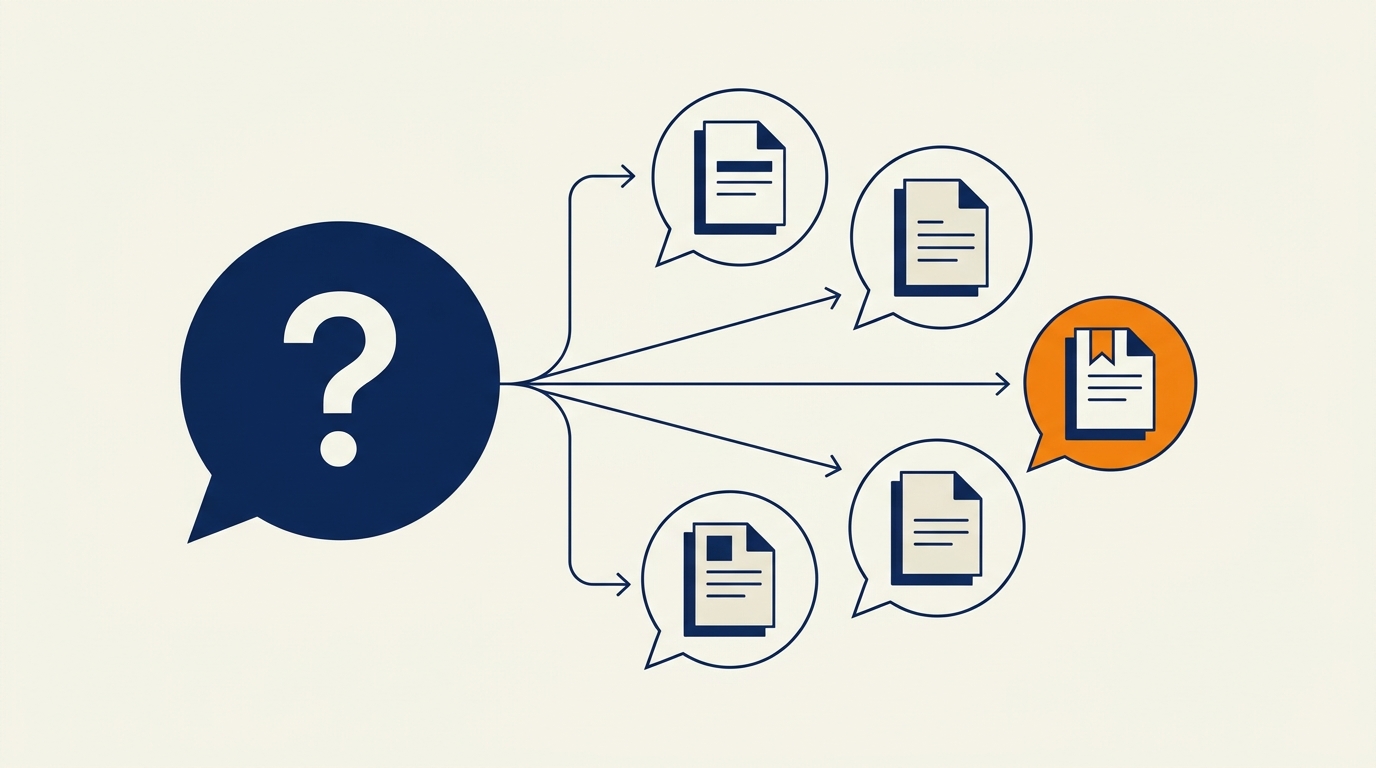
A traditional results page sorts links. An AI answer reads across a set of pages, writes a reply, and attaches links to the pages it leaned on. The unit of competition is no longer the keyword position. It is the sub-question.
Ask an assistant "do I need a lawyer to adopt my stepchild in Ohio" and it does not look for one page that covers adoption law in full. It looks for pages answering whether an attorney is required, what the filing costs, how long a home study takes, and who has to consent. Four different pages, four different chances for a firm to be the one that gets cited.
That reframing matters for a three-attorney firm with no content team. You are not trying to beat a statewide competitor on a head term. You are trying to be the clearest answer to one narrow question in your own county.
When Someone Asks an Engine for a Lawyer, It Names Directories and Bar Listings More Often Than Firms
The clearest public data on this comes from the 5W Legal AI Visibility Index, a 2026 study that asked 24 legal questions three times each across ChatGPT, Claude, Gemini and Perplexity and then counted what the 288 answers named. The findings are worth reading slowly, because they invert the usual assumption that your website is the main asset.
| Name | Named in answers |
|---|---|
| State bar associations | 57.3 percent (165 of 288) |
| Martindale-Hubbell | 47.6 percent (137 of 288) |
| Avvo | 46.2 percent (133 of 288) |
| FindLaw | 41.7 percent (120 of 288) |
| Super Lawyers | 35.4 percent (102 of 288) |
| Justia | 35.1 percent (101 of 288) |
| Best Lawyers | 24.3 percent (70 of 288) |
Of the 2,447 citations the study counted, directories and rankings supplied 746, or 30.5 percent. Company and brand sites supplied 671, or 27.4 percent. A firm's own domain is a real source of citations, but it is roughly tied with, not ahead of, the third-party pages that describe the firm.
Two practical readings follow. First, a complete and consistent listing matters as much as a new page. If your Avvo profile lists an old office and no practice description, you are handing the engine out-of-date material about your own firm. Second, the state bar remains a named source in most answers, which means your bar listing and any bar-produced directory page are worth checking for accuracy before you write another blog post.
The study also includes a result that should unsettle anyone who assumes size wins. Kirkland & Ellis was named in 49 of 288 answers, or 17 percent, yet kirkland.com appeared in only 4 of the 265 answers that carried citations, or 1.5 percent. The engine knew the name and cited other pages that described the firm. Wikipedia was the single most cited domain in the study, at 147 of 2,447 citations, or 6 percent. No law firm website came close.
Neither fact means a firm site is pointless. Together they show that citations follow pages an engine can verify and quote, wherever those pages live. For a solo or small firm the work is therefore split. Half is publishing narrow answers you control. The other half is getting the pages you do not control to say the same true things: bar profile, directory listings, legal aid and bar referral pages, local news mentions, association bios. That second half is link building in practice, and it is the part most firms skip. Our guide to attorney link building covers what a mention on a real local page is worth compared with a paid listing.
Google Fans One Question Out Into Several Searches Before It Writes a Reply
Google describes the mechanism in its documentation on AI features and your website: AI Overviews and AI Mode "may use a query fan-out technique, issuing multiple related searches across subtopics and data sources" to build a response. The same page states that to be eligible as a supporting link, a page only needs to be indexed and eligible to be shown in Google Search with a snippet, and that there are "no additional technical requirements."
Read that twice, because it defuses most of the panic around AI search. There is no secret file to add and no special markup that unlocks citations. The requirements are the ones that already govern whether a page can be indexed and summarized: crawlable text, internal links, a clean page experience, structured data that matches what a visitor sees.
What fan-out changes is how many doors you need. Google's own example of a narrow sub-question is a filing deadline or a fee, not a practice overview. A firm with one page titled "Family Law" is competing for a question no engine asks in that form. A firm with a page titled "How long does a divorce take in Ohio when both spouses agree" is competing for one an engine runs constantly.
One Narrow Page per Sub-Question Earns More Than One Long Guide
Pick one practice area and list the twelve questions a caller asks before they book. Not the questions you wish they asked. The ones your intake staff actually field: whether they need to bring documents, what the retainer covers, whether a prior filing blocks them, how long the process takes.
Then write one page per question, and answer it in the first sentence. That structure is what makes a page quotable. A reader who leaves after two lines should already have the answer, and so should an engine deciding which page to cite.
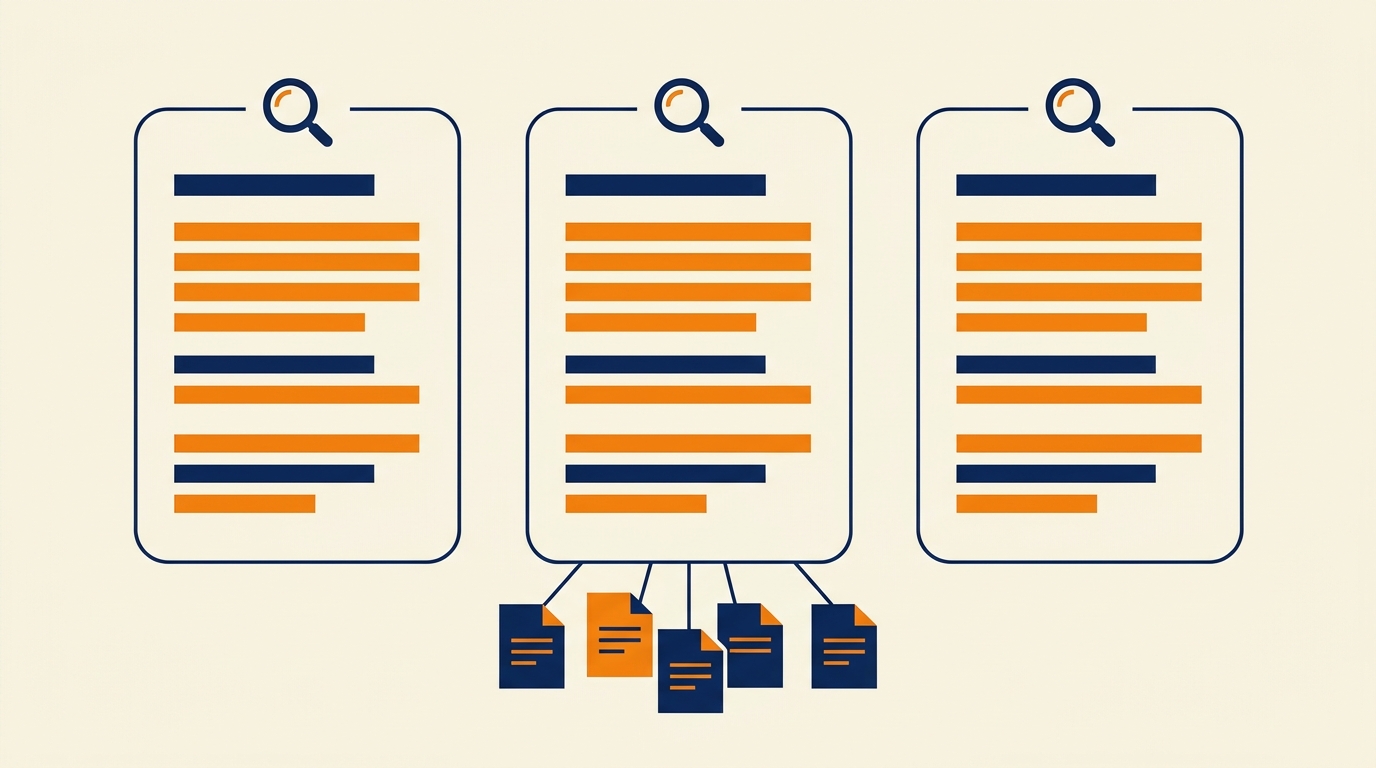
Three details decide whether the work counts. The answer has to sit in visible HTML text, not only inside an image, a PDF or a script that fills the page after it loads. The page has to be linked from your practice area page and from at least one other page on the site. And the page has to be findable in Google for a related query before an AI engine is likely to read it, which is why a law firm SEO audit is the step to run first if the site has not been touched in a year.
Local signals still carry disproportionate weight in this mix. Google's guidance lists keeping Business Profile information current as one of the basics for appearing in AI features, so a Google Business Profile with accurate hours and categories is not a separate project from AI visibility. It is the same project.
What to Do at Your Firm This Week
None of this requires a new budget line. It requires an afternoon and a list.
- Ask the four engines your twelve real intake questions and write down which pages get named. Repeat each question at least twice, since answers vary between runs.
- Correct every listing you own that names the firm: bar profile, Avvo, Justia, Martindale, any local directory your county bar keeps.
- Pick the three intake questions your current site cannot answer and write one short page for each, with the answer in the first sentence.
- Check that those pages are plain HTML text and linked from your practice area page.
- Confirm your Business Profile hours, categories and service area match the site footer.
- Add "how did you hear about us" with an AI assistant option to your intake form, so you find out whether the work is producing calls rather than only mentions.
If AI Overviews are the piece you keep running into, the AI Overviews and law firm search guide covers the Google side in more detail, and SEO for law firms covers the foundation the whole system rests on.
Frequently Asked Questions
Do I need a special file or setting to appear in AI search results?
No. Google's documentation states that a page only needs to be indexed and eligible for a snippet, and that there are no additional technical requirements. What does matter is that crawlers are allowed in and that your important text is real HTML rather than locked inside an image.
Why does an AI engine name Avvo or Justia instead of my firm?
Because those pages answer the question the engine asked. In the 5W Legal AI Visibility Index, Avvo was named in 46.2 percent of 288 answers and Justia in 35.1 percent, while directories and rankings supplied 30.5 percent of all citations counted. Directory pages are structured, consistent and easy to quote.
Should I stop writing long guides and only write short pages?
Keep both, but change the job each one does. Long guides work as the page you link from and as background for a reader already convinced. The narrow pages are what get pulled into an answer, because each one matches a single sub-question that an engine actually runs.
How do I know whether this is working if I cannot see my AI traffic?
Ask the engines the questions yourself on a fixed schedule and record what they name. Then close the loop at intake with a "how did you hear about us" option for AI assistants. Mentions without a way to attribute them are hard to defend at budget time.
Does any of this replace normal SEO?
No. The same pages that get indexed and ranked are the pages an engine can cite. If a page cannot be found in Google for a related query, an AI engine has little reason to surface it either.
Conclusion: The Answer Is Built From Many Pages, So Build Many Answers
The firms that appear in AI answers are not the ones with the longest guide. They are the ones whose name keeps showing up on pages an engine can check, and whose site answers one narrow question per page in plain language.
Start with the twelve questions your intake staff already hears, fix the listings that get your own facts wrong, and publish the three pages that answer what your site currently avoids. That work compounds in both places that now matter: the map, and the answer above it.