
Law firm SEO usually takes months, not weeks, and the two surfaces move on separate clocks: the work that leans on your Google Business Profile applies to a listing Google already knows, while a newly published page often waits a year or longer for a top ten position. Google's SEO Starter Guide says some changes take effect in hours, others take several months, and that a site owner should wait a few weeks before judging whether a change helped.

The question underneath this one is usually about money. A firm owner signs a contract, writes a check, and wants to know when the phone starts ringing. Nobody can hand you a date, including Google. What you can get is a realistic range, a way to check progress every month, and a clear signal for telling a program that is working from one that has stalled.
Two Clocks Run at Once: the Map Pack Moves First, New Organic Pages Move Last
Google treats local results and regular organic results as separate systems, and they age at different speeds.
The map pack is the three-result block with a map, sitting above the regular links. It is built from your Google Business Profile. Google's local ranking help page names the inputs: relevance, distance and prominence. Relevance is how well the profile matches what someone searched. Distance is where the searcher stands. Prominence reflects how well known the business is, and Google says that includes links to your website and how many reviews you have. The same page states there is no way to request or pay for a better local ranking.
Two of those three are within reach of a firm this week. Google's help page says businesses with complete and accurate information are more likely to show up in local results, and that more reviews and positive ratings can help local ranking. Filling in every field on the profile and setting up a steady request to clients is work that can start today. Google publishes no schedule for when a profile edit pays off. The difference that matters is mechanical: a profile edit is applied to a listing Google already holds, while a new page has to be crawled, indexed and then weighed against its competitors. If the profile is your weak spot, start with Google Business Profile for law firms and the ranking factors behind it.
Organic rankings work differently. A new practice-area page has to be crawled, indexed, and then weighed against pages that have been earning links and clicks for years. Nothing about your site can skip that comparison.
Ahrefs Followed Two Million Pages, and Only a Sliver Reached Page One Within a Year
One of the most direct public data sets on organic timing comes from Ahrefs' study of page age and ranking, which tracked URLs from their first appearance in the crawl.
of one million random URLs first seen in September 2023 reached Google's top ten within a year
of pages in the top ten are more than three years old
is the average age of the page ranked number one
All three figures come from the Ahrefs study above, published by Ahrefs.
Two more findings from that study shape how a firm should plan.
- When Ahrefs filtered differently, to two million URLs created in October 2023 with non-empty English content, 6.11% reached the top ten inside a year. Better odds, still a minority.
- Of the pages that did reach the top ten, 40.82% got there within a month. Pages targeting higher-volume terms were the ones most likely to break through that fast, and the rest of the field spread across the year.
The practical read for a firm: quick wins exist, but they cluster on phrases with less competition, and the terms that carry retainers are usually held by pages that have been there a while. Ahrefs' own advice for a page that has not cracked the top ten is to update it after about six months rather than leave it untouched and hope.
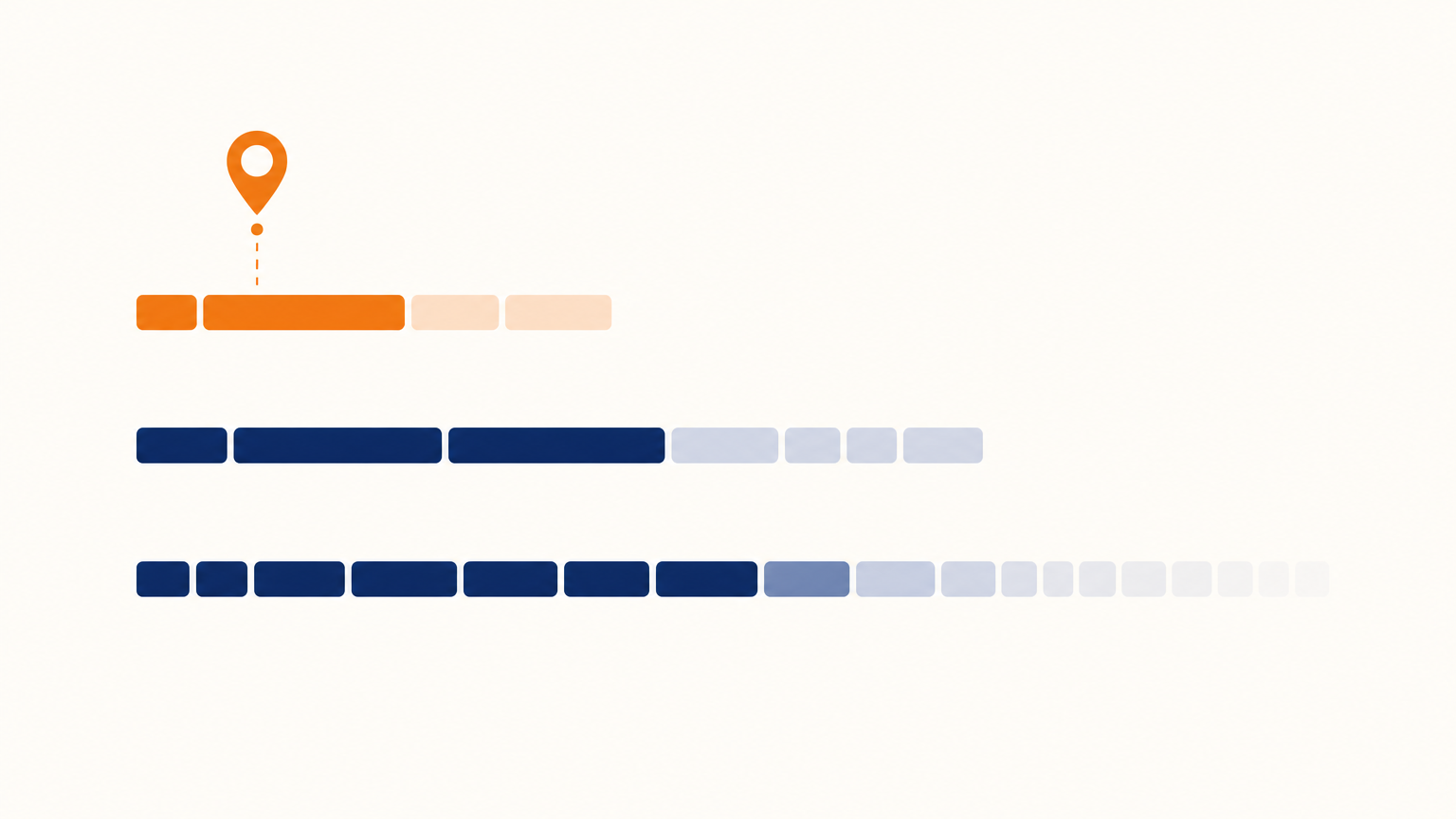
This is why a narrow post answering one question starts pulling impressions in a few weeks while the phrase that actually drives retainers stays flat for months. The narrow post has fewer established pages to beat. The broad phrase has a bar association page, a couple of national directory pages, and a local firm whose page has been collecting links since well before yours existed. For the mechanics of that comparison, see SEO for law firms, explained.
Three Things Set Your Timeline, and Two of Them Are in Your Hands This Month
Whether a program moves in a few months or takes most of a year comes down to three variables.
- Competition on the phrase. How many established pages already answer it, and how strong they are. You cannot change this, but you can pick which phrases to chase first and start where the field is thinner.
- Whether the technical work ships in month one. If new pages are not being indexed, nothing downstream matters. Indexing, page speed, internal links and clean structure are all fixable, and they are the first thing to audit.
- Evidence that a real firm stands behind the site. A complete profile, consistent name, address and phone data, named attorneys, clear practice-area pages and a steady flow of reviews. All of it is in your control.
The cheapest way to learn where you stand on the second item is an SEO audit before signing anything, not six months into a retainer.
What to Check at 30, 90 and 180 Days, Without Staring at a Ranking Report
Set three dates and look at three things. These are checkpoints for whether the work is landing, not promised positions on those dates.
| Checkpoint | What to open | What counts as movement |
|---|---|---|
| Day 30 | Search Console, Pages report and Performance report | Your target pages show as indexed, and queries you had not seen before start appearing |
| Day 90 | Search Console Performance filtered to one practice area, plus Business Profile performance | Impressions and the number of queries climb on that practice area, and the profile reports calls and direction requests |
| Day 180 | Search Console pages plus your intake log | The pages earning impressions are the ones you wanted, and the calls and forms can be traced to specific pages |
Search Console is free with any Google account and it is the only place that shows the queries your pages appeared for, so it belongs in the review even if someone else does the work. If you want the commercial half of the picture, law firm marketing ROI shows how to line those impressions up against signed matters.

How to Tell a Slow Program From a Stalled One
Slow is normal in legal search. Stalled is a billing problem, and the two look similar on a ranking chart.
A program that is slow but working tends to show these signs:
- New pages get indexed within days of publishing, and the count of indexed pages grows.
- The set of queries in Search Console widens, including phrases nobody targeted on purpose.
- Your Business Profile performance reports calls, direction requests and website clicks.
- Whoever is doing the work can name the pages they changed last month and say why.
A stalled program tends to show these:
- Pages published weeks ago still sit in a discovered but not indexed state.
- The same handful of queries appear month after month with no new ones.
- Reports lead with positions for phrases no one in your market would type.
- Nobody has asked your intake staff which calls came from the website.
When the second list describes your account, the fix is a conversation with a work log attached, not a bigger budget. On the budget side, what law firm SEO costs covers how scope and provider minimums shape a quote.
Five Timeline Questions Firm Owners Ask, Answered Without a Promise Date
Can I shorten the timeline by spending more?
More budget buys more work per month, which can clear the queue of pages waiting to be built and fixed. It does not change how long it takes an established competitor to lose its position, and Google's local ranking help page says there is no way to pay for a better local ranking. Treat a larger budget as more output, not a faster clock.
Why did my rankings move in the first month and then settle?
Early movement often comes from pages with less competition or from a profile that just became complete. Those gains can hold while most of the target phrases stay flat, because the pages holding them have years of accumulated signals. Check whether new queries keep appearing; that tells you more than a single phrase moving a few spots.
Does a brand new domain take longer than an established one?
The public data points that way. In the Ahrefs study, 72.9% of pages ranking in the top ten were more than three years old and the average number one page was five years old. A new domain can still win narrow phrases, but plan on the long end of any range you are given and put early effort where the field is thinner.
Do blog posts rank faster than practice-area pages?
They often appear in Search Console first, because a post answers a narrower question that fewer pages target. That is a sign of visibility, not the same as ranking for the phrases that bring retainers, and it is a reason to keep publishing posts while the money pages mature.
What should I ask a provider about its timeline?
Google's guidance on hiring an SEO suggests asking what results the provider expects and in what timeframe, and how they measure success. It also tells firm owners to find someone else if they are told to expect first place in search results. A provider who answers with checkpoints and a work log is telling you more than one who answers with a date.
Give a Law Firm SEO Program a Year, Then Judge It on Consultations, Not Positions
A year is the honest unit for judging organic search at a law firm. Inside that year, look for the early signals: pages getting indexed, queries widening, a profile reporting activity, a work log naming pages.
Three things you can do this week at no cost: open Search Console and confirm your practice-area pages are indexed, finish every field in your Business Profile, and put a monthly reminder on the calendar to read the queries your site appeared for. Bright Forge works only with law firms, and these checkpoints are the same ones an audit starts from.
If you are hiring or renewing, put the timeline question to the provider in Google's own terms: what results do you expect, in what timeframe, and how will you measure them. Then hold them to the checkpoints rather than the date.