
Why Your Attorney Bio Is Doing More Work Than You Think

Write your attorney bio for the person deciding whether to hire you: lead with what you do for clients, use plain language, include a photo and a clear next step. That is the whole formula, and it matters more than most firms expect. After the homepage, bio pages are typically the second most visited pages on a law firm website, and they tend to convert readers into leads more often than the rest of the site, according to The Modern Firm's content standards, which the firm publishes through JD Supra. The Oklahoma Bar Association's Management Assistance Program describes the biography as frequently the first impression a potential client or referral source receives, and points out that a compelling bio demonstrates competence and an understanding of what the client needs.
Yet most firms write the practice area pages first, and the bios last, in one sitting, with whatever is closest at hand. The result the bar association's program describes is a block of résumé text with dates, degrees and bar admissions, but little insight into who the lawyer is or why someone should contact them. That is a missed opportunity, and it is usually a quick fix.
The most common bio mistake is leading with credentials instead of service. Credentials are context, but they are not the hook. Compare the two:
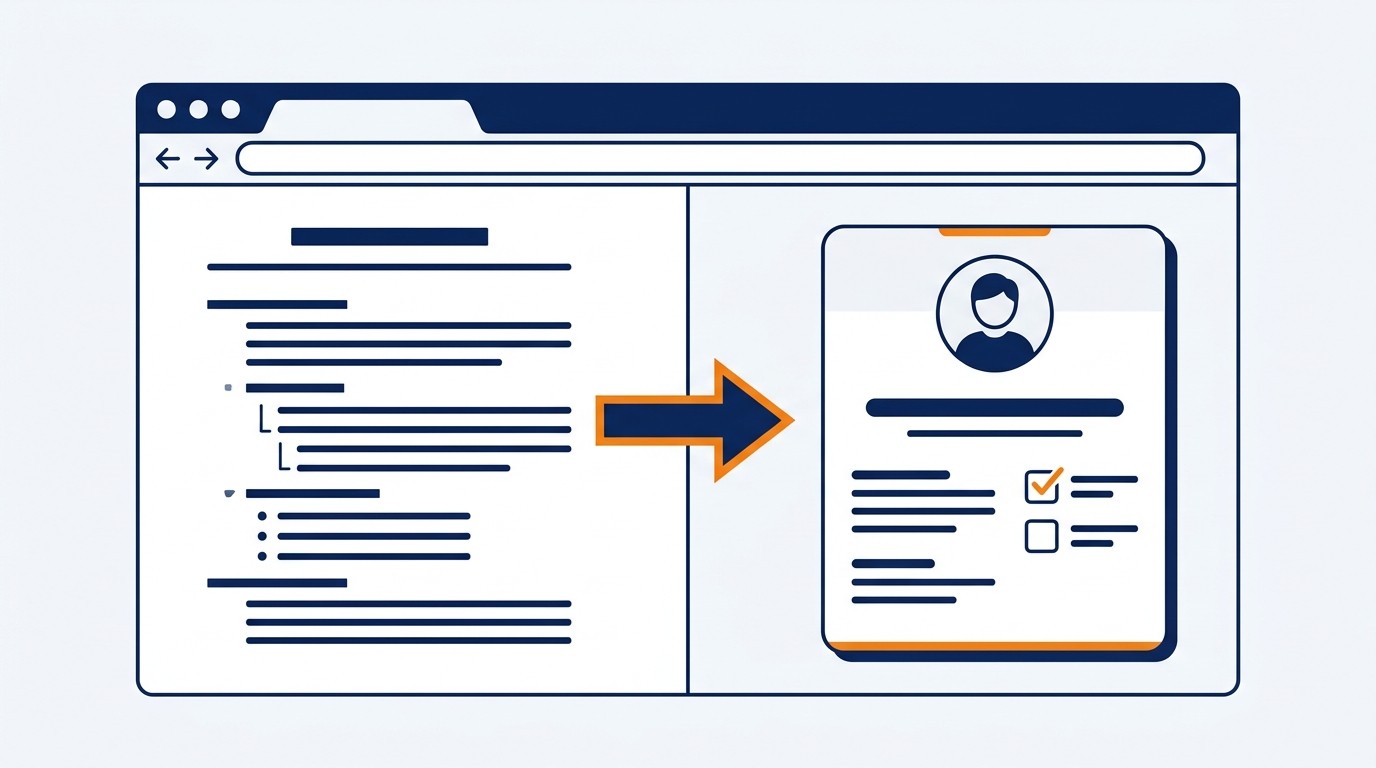
The Oklahoma Bar Association's Management Assistance Program suggests replacing an opener like "Jane Smith is a partner at Smith & Jones" with one that states the client's benefit, such as "I help Oklahoma families protect their assets through careful estate planning and trust management." The bar suggests opening with what you do for clients and reflecting an understanding of their needs before diving into your background. Their suggestions include showing rather than telling, for example "recently guided a family through guardianship proceedings with compassion and efficiency" instead of "provides excellent service," and adding a human touch with one or two sentences about your motivation or community involvement.
The Modern Firm advises leading with what you do for clients and why you are good at it, rather than just writing a chronological history of your background, and the bar association's Management Assistance Program describes the biography as the impression a potential client or referral source forms. The Modern Firm's guidance, published through JD Supra, frames it plainly: don't make the common mistake of assuming your website bio is about you. Really, it's about your clients.
When you meet someone for the first time, you don't want to hear a list of their accomplishments and achievements; you want a little glimpse into the story of their life. Their guidance asks: what does that potential client need to know about you in order to determine whether you're the right person to help them with their problem? Some clients may be looking for sympathy, reassurance, or assertiveness. Others may be seeking evidence that you've had numerous successes in the type of matter they're facing. Corporate clients may be evaluating whether your personality will mesh well with the team you'd be working with.
Both sources agree on the pattern: state the client benefit, then the credentials, then one human sentence, then the next step. Keep the opener brief and concrete. Anything longer and the reader starts scrolling for the degree and the office instead of scrolling for the phone number.
Structure and Length
Three to six sections, each with a clear heading, keeps a bio easy to scan. For length, The Modern Firm's guidance differs by practice type: for a referral-based practice where the website is largely a validation site for people checking you out after hearing your name elsewhere, aim for two to six paragraphs of five or fewer sentences each. If you are marketing yourself online and aiming to be found in organic search results, try for a length of more than 500 words, keeping it digestible with short paragraphs and skimmable headings. Search engines demand a fair amount of content to sink their teeth into, and a bio that is too short gives both readers and search engines little to work with.
The Modern Firm's published guidance also identifies the categories that most bios should include, with the most recent entry first:
- Education - where you earned your law degree and any other relevant degrees or certifications, listed with meaningful details for your clients.
- Bar and court admissions - the state bars you belong to, along with relevant federal or specialty courts. The common exception is locally-based, consumer-focused practitioners who are admitted only where they practice.
- Practice areas - list your particular areas of practice. For solos or small firms where all lawyers practice in all the areas listed on the website, this list is optional as long as you mention each area in your narrative.
- Professional associations - list the groups you belong to. You don't have to note that you're a "member" of each; that's implied. If you have held meaningful offices or chaired events for individual organizations, include them.
- Honors - list honors that are meaningful to you. Keep in mind your state bar's rules on how you describe awards.
- Representative work - if verdicts, settlements, or certain types of cases are meaningful to prospective clients in your practice area, list representative matters. For many practices, a list of representative work doesn't make sense; this is true for most family lawyers, for example. Keep it concise or link to a full CV or a separate results page.
- Publications and speaking - list articles, books, or other professional publications you have authored, along with speaking events, presentations, or teaching. Add the dates and venues.
- Community involvement - service on nonprofit boards, offices in community groups, and volunteering speaks to your character and your connection to the community.
The Oklahoma Bar Association's Management Assistance Program suggests ending your bio with a clear next step, ending with a call to action or a link to your contact page. Don't assume readers know how to reach you. Make it as easy as possible for them to reach out using their preferred method.
Plain Language Beats Jargon
Clients do not want to interpret "multi-jurisdictional dispute resolution." The bar suggests using plain language such as "help resolve conflicts across state lines" to make your services clear and accessible. Use short paragraphs, subheadings, and bullet points to make the bio easy to scan. The Modern Firm frames the purpose plainly: the primary purpose of your website profile is to encourage prospective clients to get in touch, so make it as easy as possible for them to communicate with you using their preferred method.
Photos, Contact Details, and the Care Checklist
People need to be able to put a face to your name and credentials. A photograph belongs on every bio, and it should be professionally taken, or at least look like it was. With a little practice and care, most nicer smartphones can now take portraits that work, per The Modern Firm's guide.
Keeping that photo current matters. The bar suggests reviewing your bio at least annually, noting that outdated information or an old headshot can give the impression of neglect. Headshots age quietly while caseloads change.
Exactly how you end a site profile can vary. The Modern Firm advises making sure a website visitor can contact you directly from your profile, and the bar's guidance agrees that you should end with a clear next step. Exactly how you do that can vary. For firms building trust across channels, read review generation and reputation before finalizing the contact block.

Two notes on photos before the checklist: never caption a photograph with a client's case or a claim you cannot substantiate, and never caption a photograph with a promise. Keep the photo clean, the caption factual, and the promise out of it. If the photograph ages, update it; the bar's guidance treats annual review as the minimum. The photo supports the story; it does not replace it.
- Opening states the client benefit, in your own voice, not a boilerplate headline.
- Photo present and professionally taken - or looking like it was, per The Modern Firm's guide.
- Plain language throughout - no jargon left in place to be decoded.
- Concrete example included that shows your abilities and approach, not a claim.
- Most recent entry first in every list, per The Modern Firm's guide.
- Clear next step at the end - a call to action or a link to your contact page, per OBA guidance.
- Bio reviewed at least annually, per OBA guidance.
Two illustrative examples, adapted from the guidance above, show the change:
Before (ineffective): "Jane Smith is a partner at Smith & Jones. She graduated from law school. She has handled a wide variety of cases. Jane is admitted to practice in Oklahoma and the Northern District of Texas. She has served on various committees and has spoken at several continuing legal education programs. She is dedicated to client service."
After (effective): "Jane Smith - Helping Oklahoma Businesses Resolve Contract Disputes. I've helped Oklahoma businesses protect their interests in contract negotiations and disputes. I know how stressful litigation can be, so I focus on practical solutions and keeping clients informed at every step."
The difference is clear. The revised bio is written to engage clients rather than list credentials, and it ends with a direct call to action, which the Oklahoma Bar Association's makeover demonstrates. The first version describes a career; the second speaks to a caseload. One is written for a biographer, and the other for the person reading it.
The Aftercare
Small firms generally keep the website as a validation tool for the people who already have a reason to call. Someone who met you at a community event, received a referral from a past client, or saw you speak at a continuing legal education program visits your site afterward to check you out before calling. The drafting matters, and it matters alongside the aftercare: a stale bio loses the trust it earned, so treat the review as a recurring task rather than a one-time project.
One note on compliance for the checklist: state bar rules govern how awards are described. Keep descriptions sourced and factual, and review the rules for your state.
Frequently Asked Questions
What should an attorney bio include?
The categories The Modern Firm's published guidance identifies are education, bar and court admissions, practice areas, professional associations, honors, representative work where meaningful, publications and speaking, and community involvement. List the most recent entry first. Where a practice type limits a category, for example representative work for most family lawyers, leave it out.
How long should an attorney bio be?
For a referral-based practice where the website is primarily a validation site, The Modern Firm's guidance suggests two to six paragraphs of five or fewer sentences each. For marketing-driven sites, aim for more than 500 words, keeping digestibility with short paragraphs and skimmable headings. Aim for three to six sections.
Should I include a photo in my attorney bio?
Yes. The Modern Firm's content standards say a photograph belongs on every bio and should be professionally taken, or at least look like it was. They say people need to be able to put a face to your name and credentials, and that with a little practice and care, most nicer smartphones can take portraits that work.
How often should I review my attorney bio?
The Oklahoma Bar Association's Management Assistance Program suggests reviewing your bio at least annually. Outdated information or an old headshot can give the impression of neglect. Treat annual review as the minimum and update the photo, the practice-area descriptions, and the contact details when they change.
Conclusion: Small Firms Win When the Bio Matches the Caseload
Write your attorney bio for the person deciding whether to hire you: lead with what you do for clients, use plain language, include a photo, and close with a clear next step. Keep the lists in reference order, keep the language plain, and review the whole thing at least once a year. The drafting takes an hour; the aftercare keeps it from going stale.
At Bright Forge Digital Solutions, we work with solo and small law firms on the marketing stack that turns readers into consultations, from websites and local listings to reviews and intake paths. Explore our blog for more legal marketing insights like this one.