Find a Law Firm Marketing Partner That Produces Measurable Growth

The best law firm internet marketing partner is not simply the agency that promises the most leads. It is the one with legal marketing experience, clear reporting, a strong website and search strategy, and a contract that leaves your firm in control of its domain, website, data, and creative assets.
Before you hire, compare at least two agencies and ask:
- Can they show relevant results for firms like yours?
- Do they explain how they will generate calls, consultations, and signed cases?
- Will your firm own every marketing asset if the relationship ends?
- How will they track cost per lead, cost per signed client, and revenue?
- Do they work with a direct local competitor in your practice area?
Google is where many legal searches begin: research suggests prospective clients turn to it about 90% of the time when seeking professional legal help. That makes your website, local search visibility, reviews, and intake process parts of one system - not separate marketing projects.
I am Nick Saucier, an attorney, longtime Judge Advocate General, and owner of Bright Forge Digital Solutions, where I help solo and small firms evaluate and build the best law firm internet marketing systems for sustainable client growth. The next sections break down what to look for, what to avoid, and how to connect marketing spend to actual case revenue.

Core Pillars of the Best Law Firm Internet Marketing Strategies
A successful digital strategy is not a collection of disconnected tactics; it is a synchronized engine. When legal marketing fails, it is usually because an agency treated website design, search rankings, paid ads, and reputation management as isolated silos.
For solo practitioners and boutique law firms, every marketing dollar must pull its weight. True growth happens when your digital channels work together seamlessly, capturing prospective clients at the exact moment they need legal counsel and shepherding them through an effortless intake experience.

High-Converting Website Architecture and Conversion Optimization
Your website is your firm's digital storefront, conference room, and primary intake officer all at once. In competitive legal markets, prospective clients make snap judgments about your professionalism and capability within milliseconds of landing on your page.
If your website loads slowly, buries practice area details, or makes it difficult to contact an attorney, high-intent traffic simply bounces back to the search results to hire a competitor. Crafting winning websites requires building an intuitive practice-area silo structure where every legal service has a dedicated page designed to answer urgent client concerns.
Modern conversion rate optimization means integrating frictionless contact methods, clean mobile layouts, prominent phone numbers, and automated intake workflows that capture lead details around the clock. By refining page layout, messaging, and calls to action, firms can systematically achieve 4x conversions from the traffic they already attract.
Dominating Search Visibility with Local and Organic SEO
Attracting traffic begins with dominating organic search. When someone searches for an estate planning attorney or criminal defense lawyer in your jurisdiction, you want your firm positioned directly in front of them.
Legal search engine optimization is split into two primary arenas:
- Local SEO & The Google 3-Pack: Capturing the coveted map pack listings at the top of local search queries. This relies heavily on complete Google Business Profile optimization, localized geographic citations, and strong local authority signals. For an in-depth breakdown of winning local search real estate, consult Local SEO for Law Firms: The 2026 Playbook to Get Found, Get Calls, and Get Clients.
- Organic Practice-Area SEO: Ranking your core practice pages beneath the map pack for high-intent search terms. This involves in-depth content that addresses specific legal scenarios, clear technical site health, and authoritative backlink profiles.
Rather than locking law firms into expensive, speculative monthly retainers with no ranking guarantees, our team utilizes Pay Per Result SEO. Under this performance model, firms only pay for organic search terms when they achieve first-page rankings on Google.
Paid Acquisition via Local Service Ads and Paid Search
Organic rankings build tremendous equity over time, but paid acquisition delivers immediate visibility when you need qualified calls right away. Paid search gives law firms the agility to capture targeted market share while organic campaigns mature.
Two distinct paid channels dominate legal digital marketing:
- Google Local Services Ads (LSAs): Positioned at the very top of Google search results, LSAs feature your headshot, business hours, and the Google Screened badge. These operate on a pay-per-lead model rather than pay-per-click, meaning you only pay when an actual prospective client calls or messages your office directly. Explore how Local Service Ads provide high-trust direct lead flow.
- Targeted Pay-Per-Click Search Ads: Highly granular search engine marketing that targets specific, high-intent legal keywords. Legal search terms can be exceptionally competitive—for example, search keywords around mesothelioma lawsuits can cost hundreds of dollars per click. However, because an average mesothelioma settlement exceeds $1 million, high ad costs deliver an exceptional return when targeted correctly. Leveraging structured Google Advertising ensures your campaigns target only the highest-converting search terms without draining your budget on unqualified clicks.
Client Reviews and Automated Reputation Management
Prospective clients rarely hire an attorney without reading third-party reviews first. A five-star rating with detailed, empathetic client feedback serves as the ultimate digital trust signal, directly influencing your conversion rates and local search rankings.
Collecting reviews consistently requires a proactive, automated process. Implementing dedicated Review Generation & Reputation software allows your firm to request feedback via SMS and email automatically once a matter successfully concludes. Building an authentic portfolio of Google Lawyer Reviews establishes unshakeable local authority while strictly adhering to American Bar Association advertising ethics and client confidentiality rules.
Key Evaluation Criteria for Choosing a Legal Marketing Agency
Hiring an agency partner shouldn't feel like a high-stakes cross-examination. Yet, many attorneys find themselves locked into bloated monthly contracts that produce plenty of vanity metrics but zero signed retainers. Selecting the right marketing partner requires evaluating how an agency structures its technology, pricing, and ownership models.

What Distinguishes the Best Law Firm Internet Marketing Agency Models
The most effective legal marketing agencies share distinct operational traits:
- Law-Firm-Only Specialization: Generalist agencies juggle plumbers, dentists, and e-commerce shops alongside legal practices. Law firm marketing requires an intimate understanding of legal intake cycles, ethical advertising compliance, local jurisdictional boundaries, and practice-specific search intent.
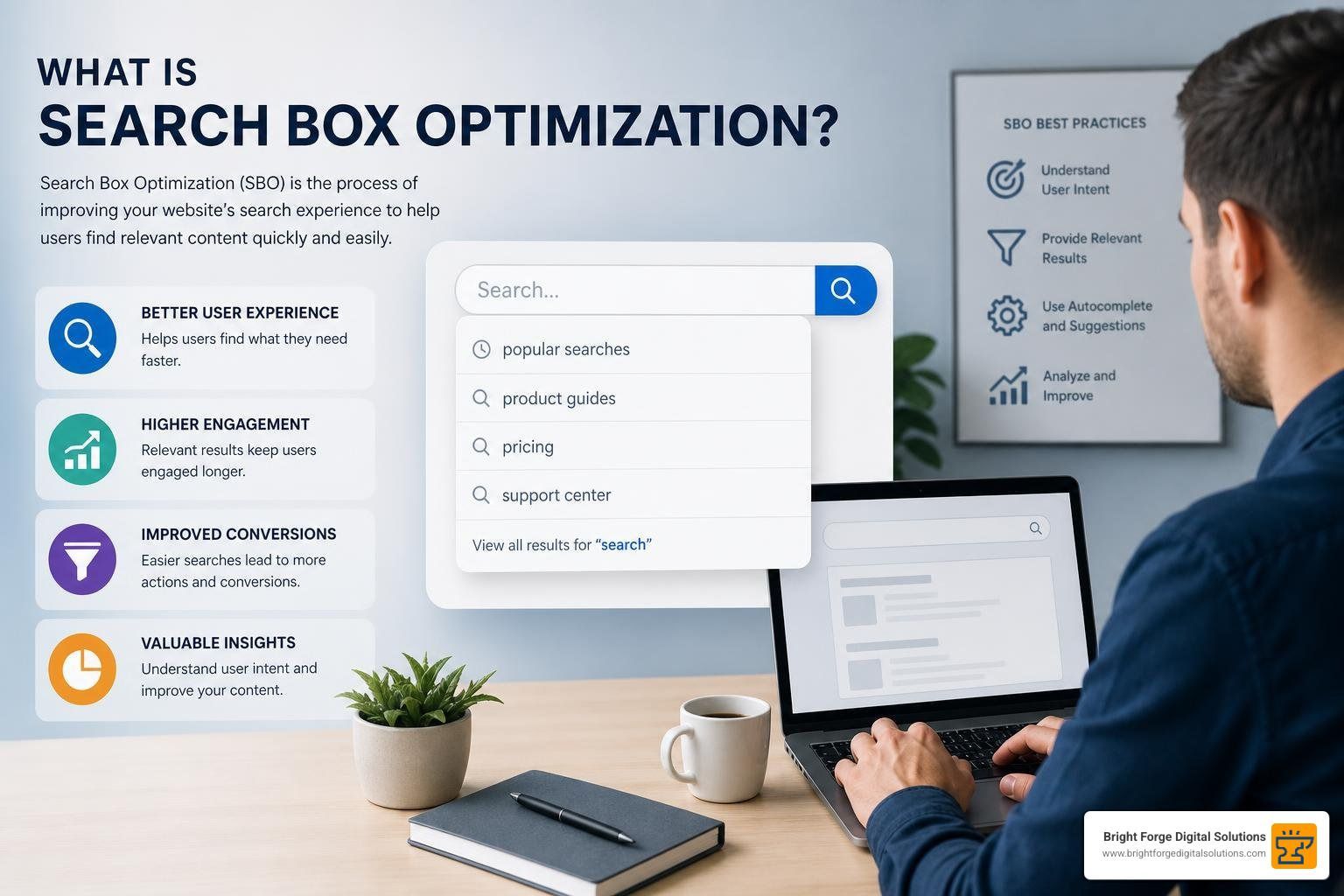
- Search Box Optimization (SBO): Forward-thinking agencies help firms appear directly in Google's autocomplete suggestions before a user even finishes typing their search query, securing exclusive search positioning.
- Performance-Based Pricing: Look for partners willing to tie their compensation directly to measurable performance milestones, such as ranking keywords on page one before billing for them.
- AI-Assisted 24/7 Intake: Seamless legal chatbots and intake automation ensure that after-hours website visitors are immediately engaged and qualified.
- Transparent Reporting: Direct access to analytics dashboards that track calls, form submissions, cost per lead, and revenue attribution—not just abstract traffic numbers.
Agency vs. In-House Marketing: How Small Firms Win
Solo practitioners and boutique law firms frequently grapple with the choice between hiring an internal marketing coordinator or partnering with an outside legal agency.
For firms with fewer than 10 attorneys, an agency model almost always provides superior value, access to specialized skillsets, and rapid campaign execution without the overhead of full-time employee salaries, benefits, and specialized software subscriptions.
| Evaluation Category | Specialized Legal Marketing Agency | In-House Marketing Hire |
|---|---|---|
| Skillset Breadth | Full team of SEO specialists, developers, copywriters, and paid media managers | Single generalist with limited domain expertise |
| Total Cost | Predictable monthly service or performance fee | Salary ($60k–$100k+) plus benefits, payroll tax, and tech tools |
| Tech Stack Access | Enterprise SEO, rank tracking, CRO, and call-tracking tools included | Firm must purchase expensive individual software licenses |
| Execution Speed | Immediate implementation with proven frameworks | Slow ramp-up time and ongoing training requirements |
| Accountability | Retained based on measurable client growth and ranking results | Ongoing overhead regardless of performance outcomes |
Critical Red Flags: Asset Ownership, Lock-In Contracts, and Competitor Conflicts
Before signing any agency agreement, review the fine print for these three critical pitfalls:
- Hostage Assets and Domain Locking: Some legacy agencies build your law firm's website on proprietary, closed platforms or retain ownership of your domain name, ad accounts, and creative content. If you terminate the agreement, they take your website and rankings down. Always ensure your contract explicitly states that your law firm owns 100% of your domain, website assets, creative collateral, and advertising accounts.
- Long-Term Lock-In Retainers: Agencies that demand 12- to 24-month commitments upfront with no performance contingencies often prioritize their recurring revenue over your actual results.
- Local Competitor Conflicts: Only one law firm can hold the number-one organic ranking for "Austin personal injury lawyer." If an agency works with three of your direct competitors in the same geographic radius and practice area, a fundamental conflict of interest exists. Insist on clear geographic exclusivity terms.
Budgeting and Calculating Legal Marketing ROI
Digital marketing should never be an arbitrary expense line on your balance sheet; it is an investment vehicle designed to yield predictable financial returns.
Measuring ROI and Acquisition Costs
The standard benchmark for digital marketing budgets across the legal industry is 2% to 12% of gross revenue. Firms looking to maintain their current caseload generally hover near the lower end of that range, while ambitious practices seeking aggressive territorial expansion allocate 10% to 12% or more.
When evaluating your campaigns, the baseline metric to track is your Revenue-to-Cost Ratio.
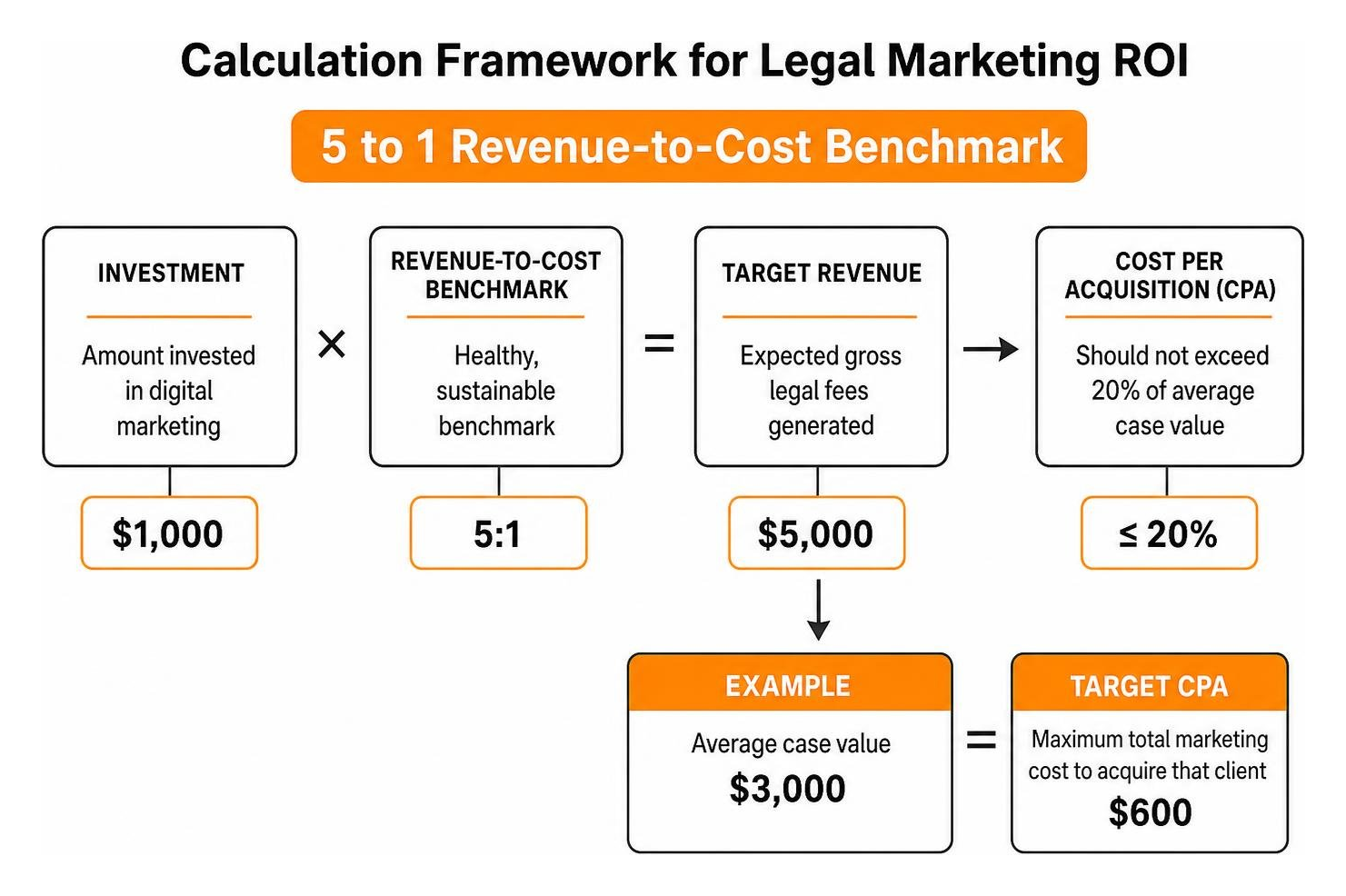
A 5:1 revenue-to-cost ratio is universally recognized as a healthy, sustainable benchmark for legal marketing. This means that for every $1,000 invested in digital marketing, your campaigns should generate $5,000 in gross legal fees.
Under this framework, your target Cost Per Acquisition (CPA) should not exceed roughly one-fifth (20%) of your average case value. For example, if an average estate plan or uncontested divorce yields $3,000 in firm revenue, your total marketing cost to acquire that client should sit near or below $600.
Understanding these numbers allows law firms to scale profitable campaigns with complete confidence. For a deeper dive into measuring return on search investments, read our guide on Law Firm SEO ROI.
How Boutique and 5-Attorney Law Firms Can Outrank Megafirms
Small law firms often assume they cannot compete against massive regional or national firms spending hundreds of thousands of dollars each month on traditional billboards, television spots, and aggressive broad-match ad campaigns.
In digital search, agile boutique firms hold significant structural advantages:
- Hyper-Local Authority: Search engines prioritize geographic relevance. A 5-attorney firm with a dialed-in Google Business Profile, localized citations, and consistent neighborhood reviews can easily outrank a massive regional firm in local map pack results.
- Deep Niche Positioning: While large firms publish generic, surface-level overview pages, a boutique firm can build out comprehensive, highly specific content addressing nuanced local legal questions (e.g., local county court procedures, specific municipal ordinances, or specialized injury claims).
- Agile Intake and Lead Response: Large firms frequently lose viable cases to slow, bureaucratic call centers. Boutique firms that implement automated AI chat, instant SMS lead routing, and immediate consultation scheduling can close high-value cases before the megafirm's intake department even returns the initial voicemail.
Frequently Asked Questions About Legal Digital Marketing
How much should a law firm budget for digital marketing?
Most legal practices should allocate between 2% and 12% of their gross revenue to digital marketing. Emerging practices or firms aiming for aggressive market expansion in highly competitive practice areas (such as personal injury, criminal defense, or mass torts) typically invest toward the higher end of that scale. Established firms focused primarily on retaining steady market share and nurturing client referral pipelines can operate effectively near the lower end.
What is a good ROI for attorney digital marketing campaigns?
A 5:1 revenue-to-cost ratio is widely considered the industry standard for strong digital marketing performance. For every dollar spent on paid ads, SEO, and website optimization, your firm should aim to generate five dollars in gross legal fees. For high-value contingency practices—such as commercial litigation or personal injury—successful settlements can push effective ROI ratios well above 10:1.
How can a 5-attorney law firm effectively compete against large firms online?
A 5-attorney firm can successfully outmaneuver larger competitors by focusing on local search dominance, agile conversion systems, and niche content depth. By capturing the Google 3-Pack via optimized Google Business Profiles, leveraging Google Local Services Ads with the Google Screened badge, collecting consistent five-star client reviews, and deploying 24/7 automated intake capture, boutique firms can secure top-tier local cases without matching the megafirms' massive traditional advertising budgets.
Conclusion: Selecting Your Legal Growth Partner
Finding the right digital marketing partner comes down to transparency, legal industry specialization, and undeniable accountability. Your firm deserves a marketing strategy that treats client acquisition as a measurable financial system—one where you retain complete ownership of your digital assets and only pay for tangible results.
At Bright Forge Digital Solutions, we specialize exclusively in helping solo practitioners and boutique law firms dominate their local markets through performance-based search strategies, Local Service Ads management, and high-converting website systems.
Ready to build a predictable client acquisition pipeline? Explore our full suite of legal marketing services to see how we help firms scale with performance-driven digital strategies.