Defining Search Engine Autocomplete and What Is Search Box Optimization
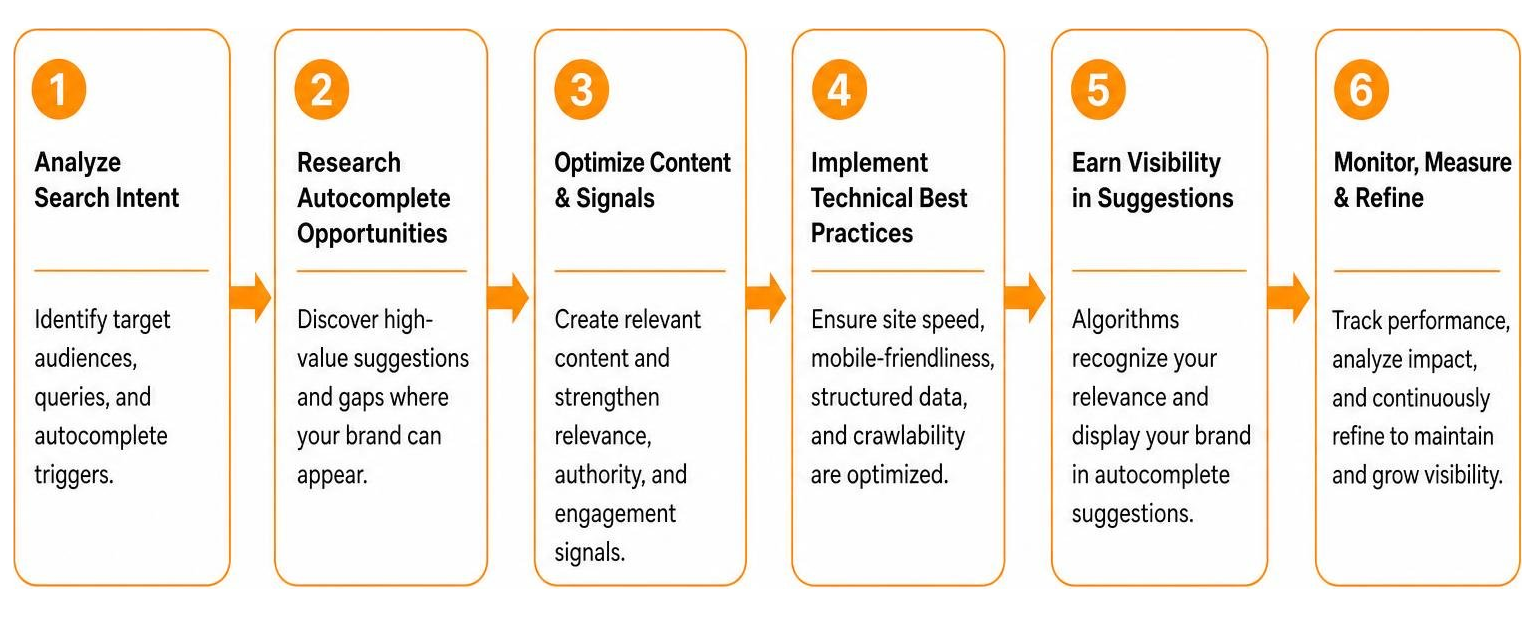
When users type into a search bar, predictive algorithms generate instant real-time suggestions based on user intent, geographic location, historical search trends, and natural language patterns. Understanding what is search box optimization requires looking at how these autocomplete mechanisms operate. Search Box Optimization (SBO) targets this critical preliminary interaction, positioning your brand or site content directly in front of active searchers before they press enter or scroll through traditional search engine results pages (SERPs).
By optimizing for predictive search algorithms, businesses can secure brand dominance early in the customer acquisition funnel. SBO allows companies to transition broad, unbranded search queries into direct, high-intent branded searches. When a prospective client selects an autocomplete prediction containing your firm's name, they skip competitor-heavy SERPs entirely and land on a search page dominated exclusively by your brand's digital assets. Furthermore, implementing comprehensive SBO practices across both external search engines and internal site search tools streamlines the overall user path, ensuring high relevance and fast response times. To explore how on-site search systems complement predictive text, consult this Search Box Optimization for Ecommerce (2026 Guide).
What Is Search Box Optimization vs Traditional SEO
The strategic distinction between SBO and traditional SEO lies in when and where user intent is captured:
- Timing in the Search Journey: Traditional SEO works post-query. It optimizes web pages to rank high on organic SERPs after a user types a full query and hits enter. SBO operates pre-query, capturing user attention while they are actively typing into the search interface.
- SERP Competition: On a traditional SERP, your website competes against pay-per-click ads, local map packs, AI overviews, and ten organic listings. SBO creates a shortcut navigation path. Selecting a suggested branded term delivers search results where your business controls nearly all visible organic space.
- User Pathways: Traditional SEO attracts unbranded organic traffic. SBO converts unbranded search intent directly into branded queries, building top-of-mind awareness and establishing immediate authority.
The Dual Scope: Search Engine Autocomplete vs Internal Site Search
SBO encompasses two complementary digital marketing disciplines:
- External Search Engine Autocomplete: Influencing global search engine interfaces like Google to suggest your business name during unbranded search queries (e.g., suggesting your firm when users type "top estate lawyer in [city]").
- Internal Site Search Optimization: Optimizing the internal search bar functionality within your own website or web app.
External SBO focuses on customer acquisition and external digital visibility. Internal SBO focuses on conversion rate optimization (CRO), content discovery, and query management once a user lands on your platform. Modern digital strategies require aligning both disciplines to deliver a seamless experience from the search bar to final lead conversion.
Key Benefits and Impact on UX and Conversion Rates
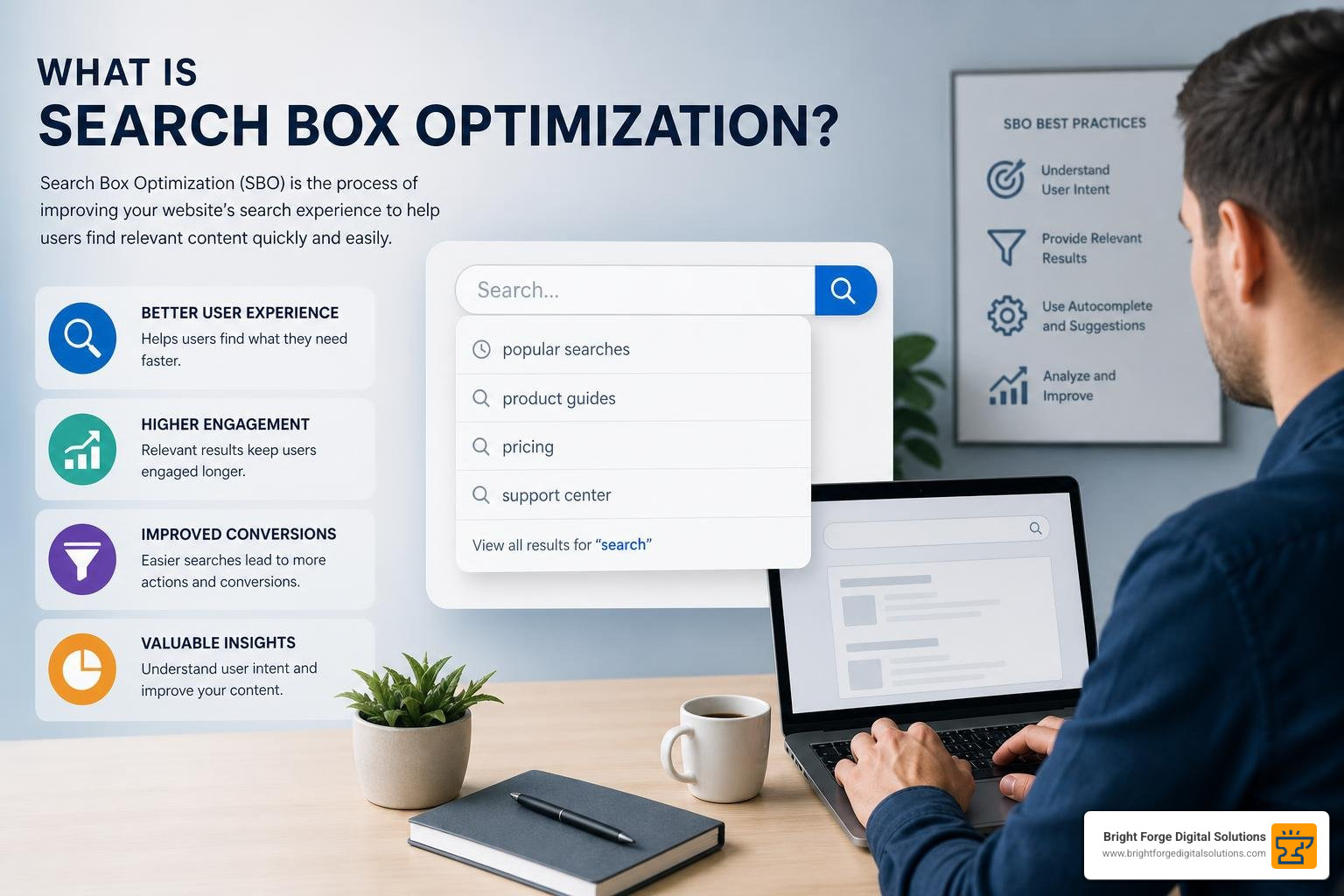
Optimizing predictive search and internal site navigation directly influences overall digital performance metrics. With mobile devices now driving up to 62.54% of global web traffic, providing immediate, frictionless search pathways is vital to retaining mobile users who demand fast, precise answers.
Core Advantages for Modern Brands
Implementing SBO delivers several distinct advantages:
- Top-of-Mind Awareness: Appearing directly inside the search bar drop-down establishes high brand authority at the exact moment a prospective buyer defines their problem.
- Overshadowing Competitors: Bypassing traditional SERP listings prevents potential clients from evaluating competing service providers or direct ads.
- Higher Click-Through Rates (CTR): Predictive suggestions carry implicit authority from the search engine, encouraging high click-through rates.
- Enhanced Lead Generation: Shortening the distance between query intent and landing page content yields higher conversion rates and lower user drop-off.
To learn more about leveraging predictive search positioning for firm visibility, explore our guide on Search Box Dominance.
How On-Site Search Boosts Engagement and Retention
Once prospective clients reach your website, internal SBO ensures they find relevant answers immediately. Because 43% of site visitors proceed directly to an internal search box, site search performance directly impacts user retention and bounce rates.
When an internal search bar yields relevant content, auto-completes complex practice area queries, and processes misspellings effortlessly, bounce rates drop substantially. In contrast, slow or inaccurate site search drives potential clients away. Industry research shows web users expect site search queries to return accurate results in under three seconds. Delivering instant results keeps users engaged, improves site browsing depth, and drives prospective clients toward scheduling a consultation. To dive deeper into on-site engagement methods, read Why SBO (Search Box Optimization) is the New SEO Trend That You Must Try and Outshine Your Competitors.
Proven Strategies for Search Box Suggestion Optimization
Search engine predictive models run on sophisticated machine learning architectures. These algorithms analyze user locations, historical query volume, language preferences, and real-time search trends. Optimizing for these predictive boxes requires a comprehensive strategy anchored in legitimate digital authority.
Algorithmic Mechanics and What Is Search Box Optimization Driven By
To optimize search box suggestions effectively, you must understand the underlying algorithms driving predictive text:
- Natural Language Processing (NLP): Algorithms interpret semantic intent rather than relying solely on exact phrase matching.
- Search Volume and Query Patterns: Frequent search sequences across the web heavily influence which phrase combinations populate in dropdown suggestions.
- Geographic and Contextual Cues: User IP addresses, localized search trends, and device types directly modify search box suggestions in real time.
Core Optimization Tactics: Content, Metadata, and Local SEO
Building sustainable autocomplete authority requires applying foundational white-hat SEO techniques across all digital touchpoints:
- Intent-Based Keyword Research: Map out long-tail search sequences that reflect exact user problems. Tailor your strategy toward conversational terms that match modern voice and predictive search habits.
- High-Authority Content & Brand Mentions: Publish comprehensive, high-value content across your digital footprint. Earning consistent third-party press, legal directory inclusions, and digital media mentions reinforces brand-keyword association within search algorithms.
- Comprehensive Metadata Optimization: Ensure site titles, meta descriptions, structural headers (H2/H3), and schema markup explicitly communicate your exact service offerings and geographic coverage.
- Local SEO Infrastructure: Search engines lean heavily on localized data for autocomplete recommendations. Optimize your Google Business Profile, secure localized backlinks, build consistent citation data, and check out our resource on Local SEO for Law Firms: The 2026 Playbook to strengthen localized authority.
- Voice and Multi-Device Alignment: Incorporate conversational natural language phrases that sync with mobile and voice search habits, supported by our insights on Business Listings & Voice Search.
Best Practices for Mobile and Desktop Search Box Design
Optimizing internal site search requires a strong focus on User Interface (UI) and User Experience (UX) design. A poorly designed search bar frustrates site visitors and diminishes lead conversion rates across desktop and mobile interfaces.
| UX/UI Feature | Desktop Search Box Design | Mobile Search Box Design |
|---|---|---|
| Placement & Layout | Centered in top header; visible across all pages | Sticky header icon expanding to full-screen overlay |
| Input Field Width | Wide field (min. 30–40 characters) | Full-width screen adaptation upon activation |
| Visual Indicators | Prominent magnifying glass icon and clear button | Large icon, touch-friendly tap target (48x48px min) |
| Autocomplete UX | Drop-down list showing 5–8 relevant suggestions | Scrollable full-screen overlay with large tap targets |
| Filter Options | Dropdown filters or side-bar facet options | Accordion filters or bottom-sheet slider menus |
Technical UX Principles for Internal Search
To maintain optimal internal site search functionality:
- Ensure Sub-Three-Second Latency: Optimize internal search database indexing so search query results load instantly.
- Implement Full-Screen Mobile Overlays: On small mobile screens, expand the search bar into a dedicated, distraction-free screen upon interaction to prevent mis-clicks.
- Utilize Clear Placeholder Text: Display helpful placeholder text (e.g., "Search practice areas, legal guides, or attorneys..." ) to encourage immediate interaction.
- Integrate Typo Tolerance and Semantic Matching: Utilize internal search engines equipped with Natural Language Processing (NLP) to handle common spelling mistakes gracefully.
Challenges, Ethical Considerations, and Performance Tracking
While search box optimization offers strategic marketing benefits, businesses must navigate algorithm updates, ethical boundaries, and analytics tracking with care.
Ethical SEO vs Manipulative Autocomplete Tactics
Attempting to gaming Google Autocomplete through artificial click bots, fake search networks, or automated query generation violates search engine guidelines. Search engines continuously roll out algorithmic updates designed to penalize non-compliant manipulation.
At Bright Forge Digital Solutions, we champion strict adherence to white-hat SEO guidelines. We build sustainable brand authority through strategic local SEO, public relations, technical content optimization, and authentic digital visibility. To learn about our performance-backed growth strategies, review our page on Pay Per Result SEO.
Measuring Success with Key Analytics
Evaluating SBO performance involves tracking both external predictive visibility and on-site search interaction metrics:
- Search Utilization Rate: The percentage of total site visitors who interact with your internal search box.
- Autocomplete Click-Through Rate (CTR): The frequency with which searchers select auto-suggested terms versus typing complete custom queries.
- Search Conversion Rate: The percentage of search-box users who complete a goal, such as filling out a contact form or booking a phone consultation.
- Zero-Result Search Frequency: The rate at which internal search queries yield zero matching items. Analyzing these logs highlights content gaps, enabling you to expand practice area content to match user demand.
Frequently Asked Questions About Search Box Optimization
Is search box optimization safe from search engine penalties?
Yes, provided you implement white-hat strategies. Focus on earning authentic media mentions, creating comprehensive content, driving real branded search volume, and establishing local directory listings. Avoid black-hat automated click services, as search engine algorithms actively flag and penalize artificial autocomplete manipulation.
How quickly do search box suggestions update?
Search engine autocomplete algorithms operate on dynamic update schedules ranging from several days to a few weeks. Update speeds depend on regional search volume, brand trending signals, news coverage, and localized query frequency. Internal site search systems reflect changes instantly upon updating page indexes or catalog databases.
How does SBO improve local business lead generation?
SBO captures high-intent prospective clients at the exact moment they begin typing local queries (e.g., "personal injury attorney in..." ). Securing localized autocomplete suggestions allows your brand to guide local searchers directly to your firm's customized landing pages, bypassing competitor listings and increasing direct phone inquiries.
Conclusion
Understanding what is search box optimization gives modern service businesses, law firms, and brands a powerful tool for capturing high-intent traffic. By targeting user search behavior during the active discovery phase, SBO connects prospective clients with your business before they navigate past standard organic listings. Combining external search engine autocomplete tactics with fast, intuitive internal site search establishes an efficient conversion pathway that turns passive searchers into loyal clients.
Ready to secure high-visibility placement across predictive search results? Contact our team today to explore how our specialized agency services and custom strategy for Search Box Dominance can elevate your practice's search presence.